Radiant panels or gas infrared heaters? How to choose the right heating system for a hall
Radiant panels or gas infrared heaters? When designing heating systems for industrial halls, warehouses or sports facilities, investors often choose between two types of radiant systems – radiant panels and gas infrared heaters (tube infrared heaters and ceramic infrared heaters). Both systems use the principle of radiation, meaning heat is transferred directly to people, floors, machines and other objects in the space. Unlike warm-air systems, it is therefore not necessary to heat the entire volume of air inside the hall.
However, there are significant differences between them in terms of operating principle, heating comfort and operating costs. The right choice of system therefore depends on the type of building, the way the facility is used and the investor’s requirements.
Principle of radiant heating
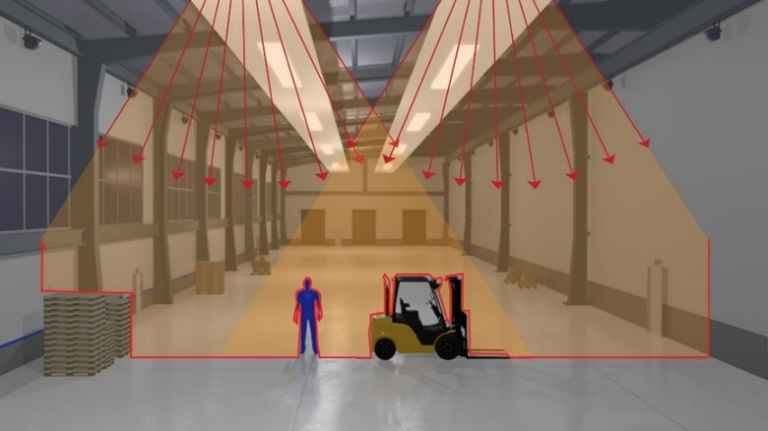
Radiant heating works in a similar way to solar radiation. The heat source emits infrared radiation that strikes surfaces within the space. These surfaces then warm up and gradually transfer heat to the surrounding air.
As a result, a comfortable and evenly distributed thermal environment is created even in large halls. A key advantage is that the heat remains in the occupied zone instead of unnecessarily accumulating under the ceiling.
Radiant panels
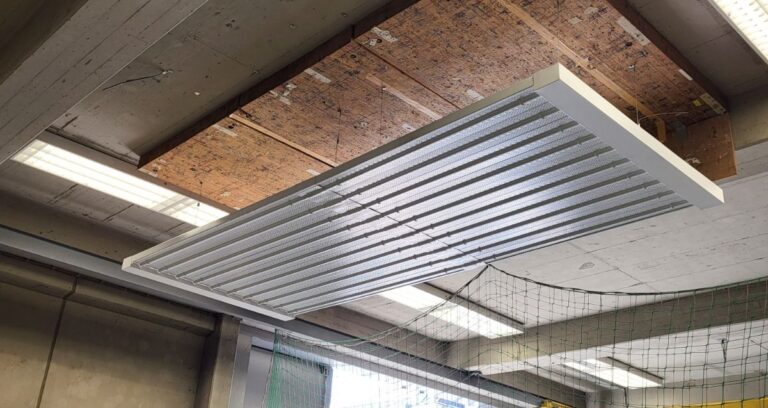
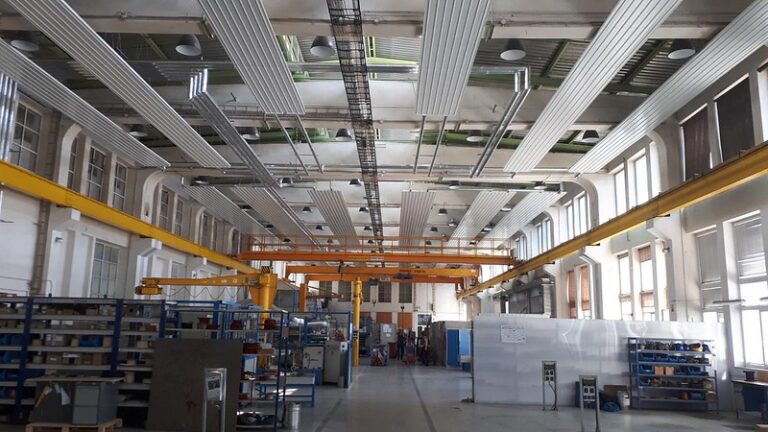
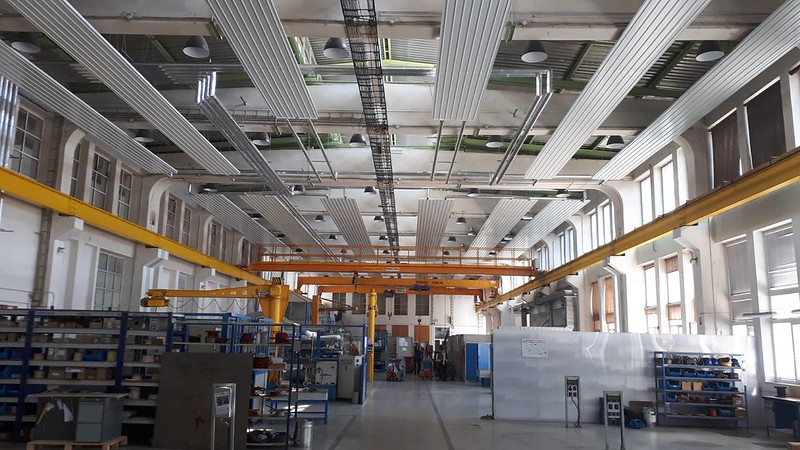
Radiant panels represent a surface-based ceiling heating system installed below the roof structure of the hall. Heat is emitted from a large panel surface and is evenly distributed throughout the heated space.
The main advantage of this solution is the uniform distribution of heat across the entire hall. Thanks to the large radiant surface, the intensity of radiation is lower but acts over a wider area, creating a very comfortable indoor environment.
Radiant panels are therefore often used in:
Another significant advantage is their long service life and minimal maintenance requirements. The system contains no fans or complex mechanical parts that would require regular servicing.
Gas infrared heaters
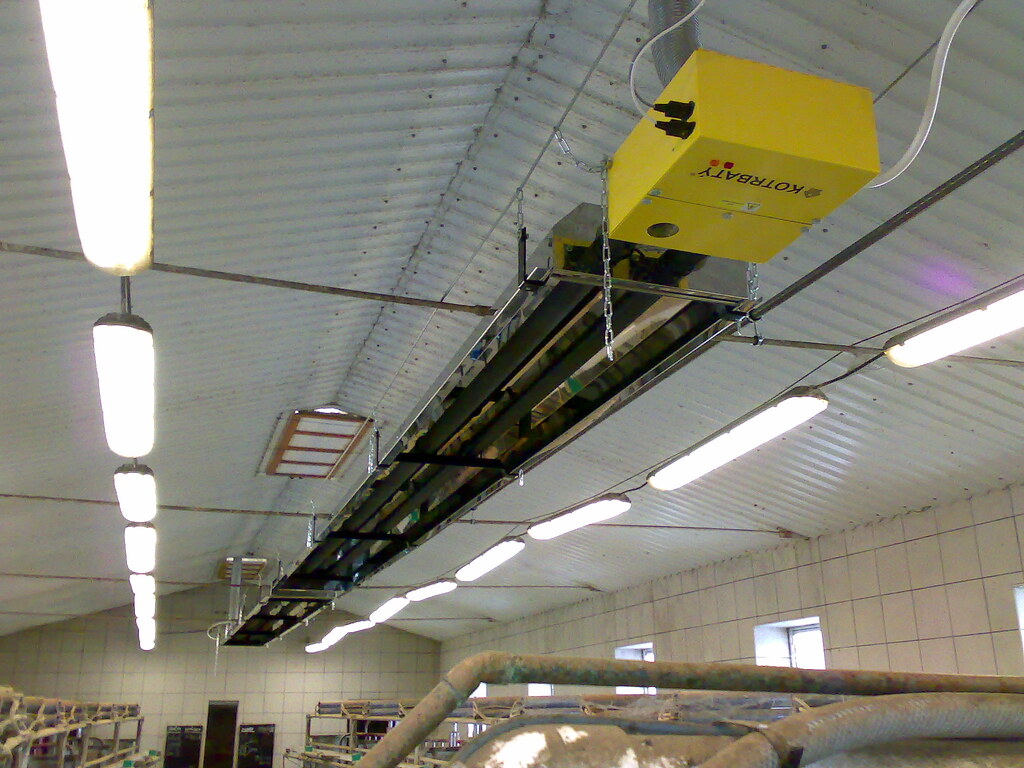
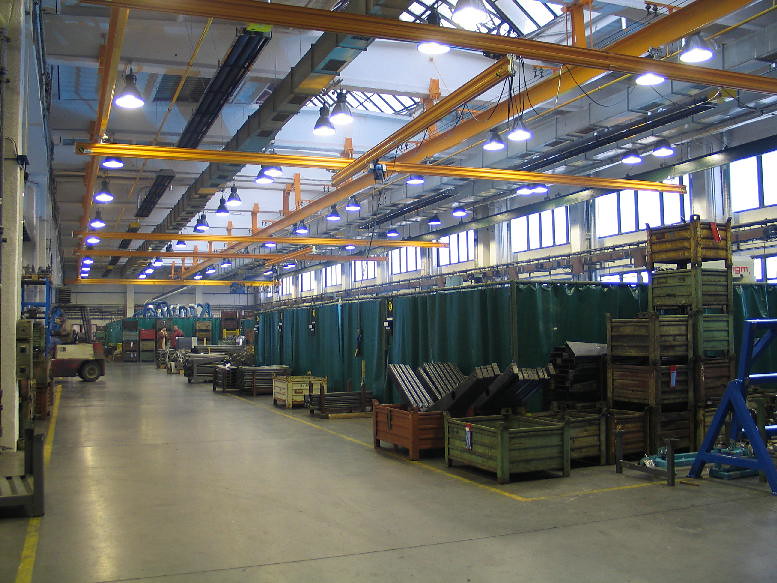
Gas infrared heaters are standalone heating units that produce intense radiant heat. Depending on their design, they may take the form of tube infrared heaters or ceramic infrared heaters.
Compared to radiant panels, they provide a higher intensity of radiation and a faster heat-up time. This makes them particularly suitable where heat needs to be delivered quickly to a specific part of the space.
They are commonly used, for example:
A potential disadvantage may be a less uniform distribution of heat within the space and higher temperature differences between individual zones.
Tube infrared heaters
Ceramic infrared heaters
Main differences between radiant panels and infrared heaters
Heating uniformity
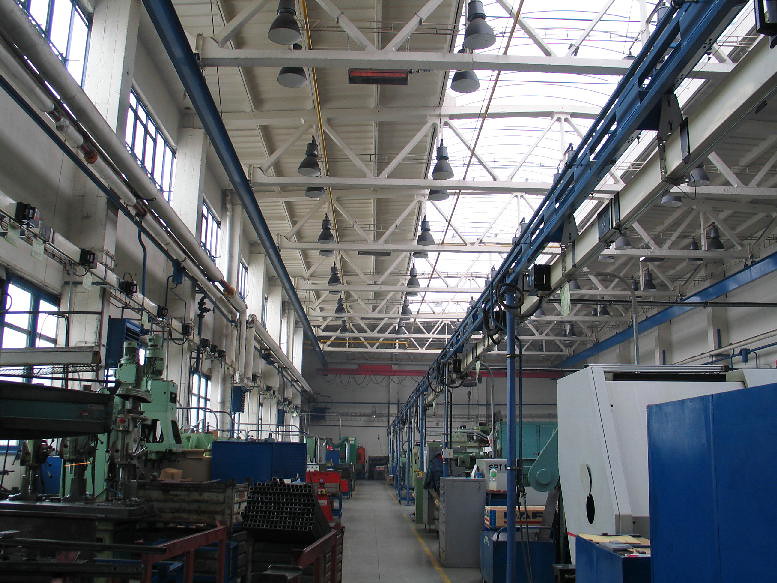
Radiant panels create surface radiation from a large ceiling area, which leads to a more uniform temperature distribution throughout the hall. Infrared heaters, on the other hand, create localized sources of intense radiation.
Heating comfort
Thanks to the lower radiation intensity, radiant panels provide a very natural and comfortable heating effect. Infrared heaters may create more noticeable temperature gradients between different areas of the hall.
Power control
Gas infrared heaters respond very quickly to changes in heating demand. Radiant panels have a slower heat-up time but offer more stable long-term operation.
Operating costs
In buildings with continuous operation and a requirement for stable temperatures, radiant panels are often more advantageous because they allow very efficient use of energy and help minimize heat losses.
How to choose the right heating system for an industrial hall
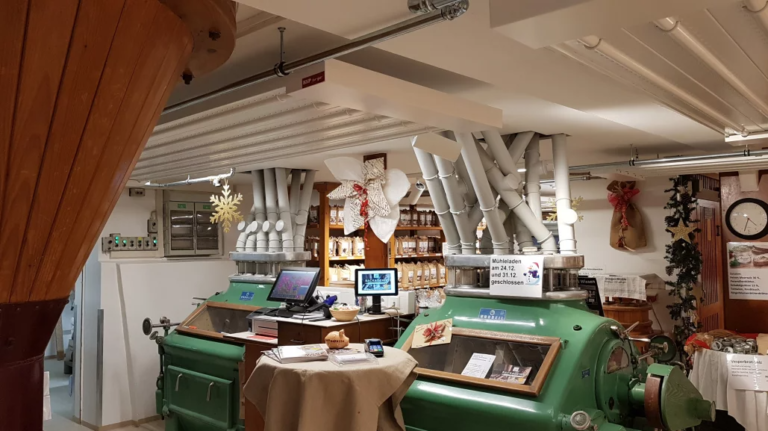
The choice between radiant panels and infrared heaters should always be based on the specific parameters of the building. Important factors include in particular:
In many cases, both systems can also be combined – for example, surface heating of the hall using radiant panels together with local heating by infrared heaters in exposed areas.
When to choose radiant panels |
When to choose gas infrared heaters |
|
uniform heating of the entire hall |
need for rapid heat-up |
|
high thermal comfort for workers |
heating required only occasionally |
|
stable temperature throughout the day |
heating only specific zones |
|
low operating costs |
buildings with very high heat losses |
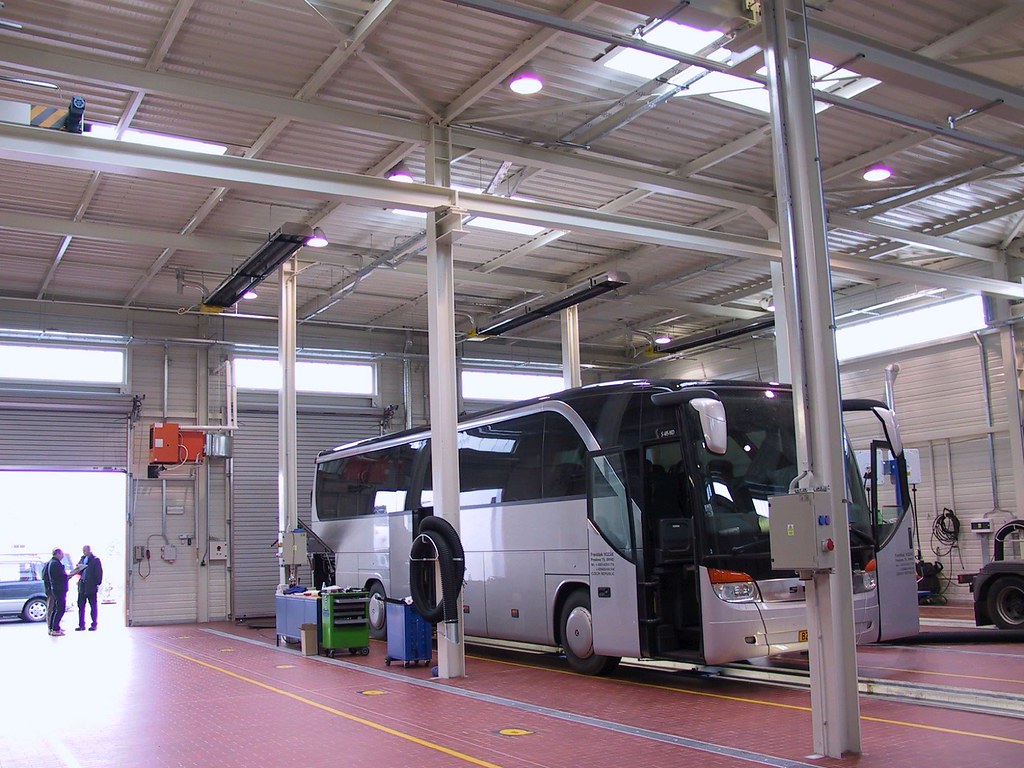
Not sure whether to choose radiant panels or gas infrared heaters for your hall?
The choice between radiant panels and gas infrared heaters depends on the specific parameters of the building – the height of the hall, heat losses, operating conditions and the required level of thermal comfort. In many cases, the two systems can also be effectively combined.
We will be happy to help you free of charge with a technical assessment and the design of the optimal heating solution.
Please fill in the short form and send us the basic information about your project. Our engineers will recommend the most suitable heating system for your building.