Energy-Efficient Heating of Industrial Halls – Radiant Heating
Energy-efficient heating – radiant heating – is a solution designed for industrial halls, manufacturing facilities, warehouses, workshops, sports halls, and other large-volume buildings where both thermal comfort and low operating costs are important. Thanks to the principle of radiation, heat is transferred directly to people and surfaces, preventing unnecessary heating of the air accumulating under the ceiling. This allows the air temperature in the hall to be lower while maintaining the same level of thermal comfort and achieving significant energy savings compared to conventional warm-air heating systems. Radiant heating is most commonly used in manufacturing halls, car service workshops, warehouses, and sports facilities.
How Radiant Heating of Industrial Halls Works
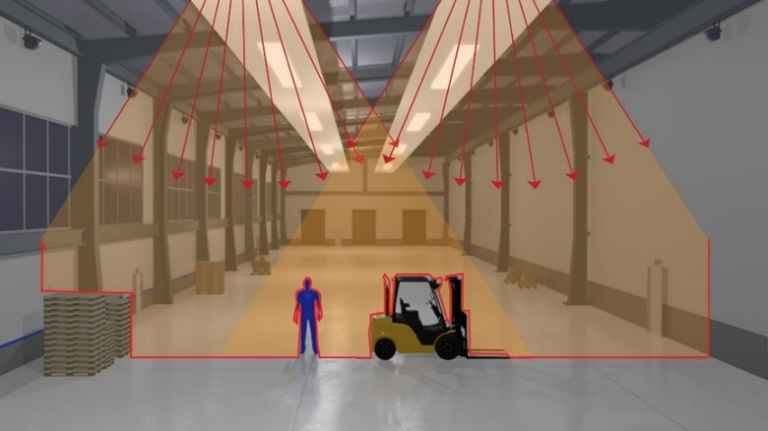
In radiant heating systems for industrial halls, heat is not transferred primarily by heating the air but by radiation directly to people, machines, and surrounding surfaces. This prevents unnecessary heat accumulation under the ceiling, which is typical of conventional warm-air heating systems.
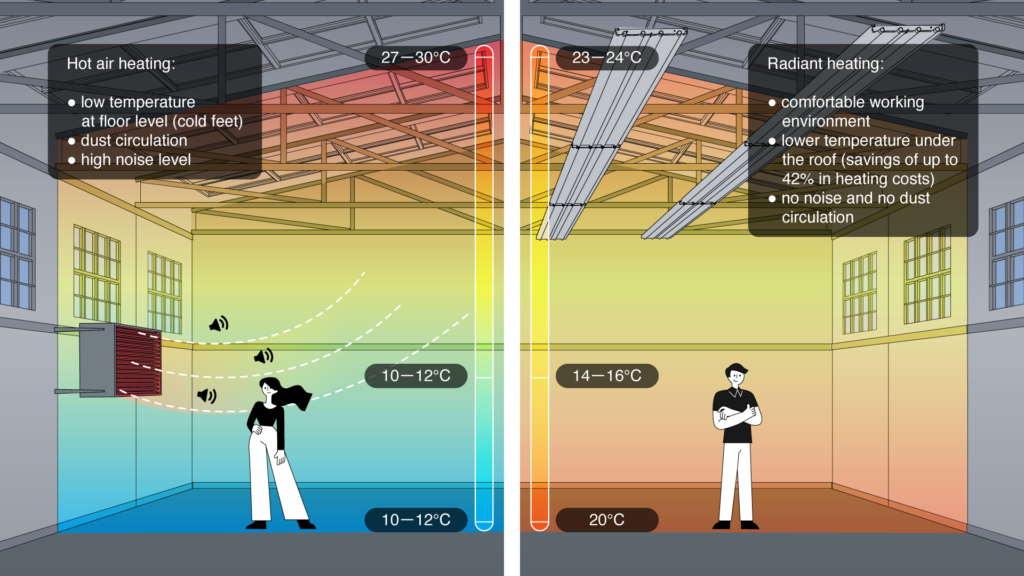
Because thermal comfort is perceived directly from the radiant surfaces, the air temperature in the hall can be reduced by up to 7 °C while maintaining the same level of perceived warmth. Each degree of temperature reduction represents approximately 6% energy savings, meaning the total potential savings can reach up to 42%.
Radiant heating therefore provides lower operating costs, more uniform thermal comfort, and higher efficiency, particularly in large and high industrial spaces.
Advantages of radiant heating:
Where Radiant Heating Is Most Commonly Used
Radiant heating is particularly suitable for heating industrial halls, manufacturing facilities, and other large-volume buildings where conventional warm-air systems lose efficiency and significant heat losses occur under the ceiling. By transferring heat through radiation directly to people, equipment, and building structures, it ensures a more uniform temperature without overheating the upper parts of the space and significantly improves the overall energy efficiency of the building.
Radiant heating is also used in smaller facilities where saving space is important and where conventional radiators would limit the layout or occupy valuable wall space. Ceiling-mounted radiant systems are therefore used not only in manufacturing halls and warehouses but also in smaller workshops, car service garages, and administrative buildings, as well as in schools and other public buildings where high thermal comfort and stable, even temperatures are required. Because they do not circulate dust, they can also be safely used in dusty environments, such as carpentry workshops.
Typical buildings where radiant heating is used:
Project Gallery – Radiant Panels, Gas Infrared Heaters and Active Ceilings
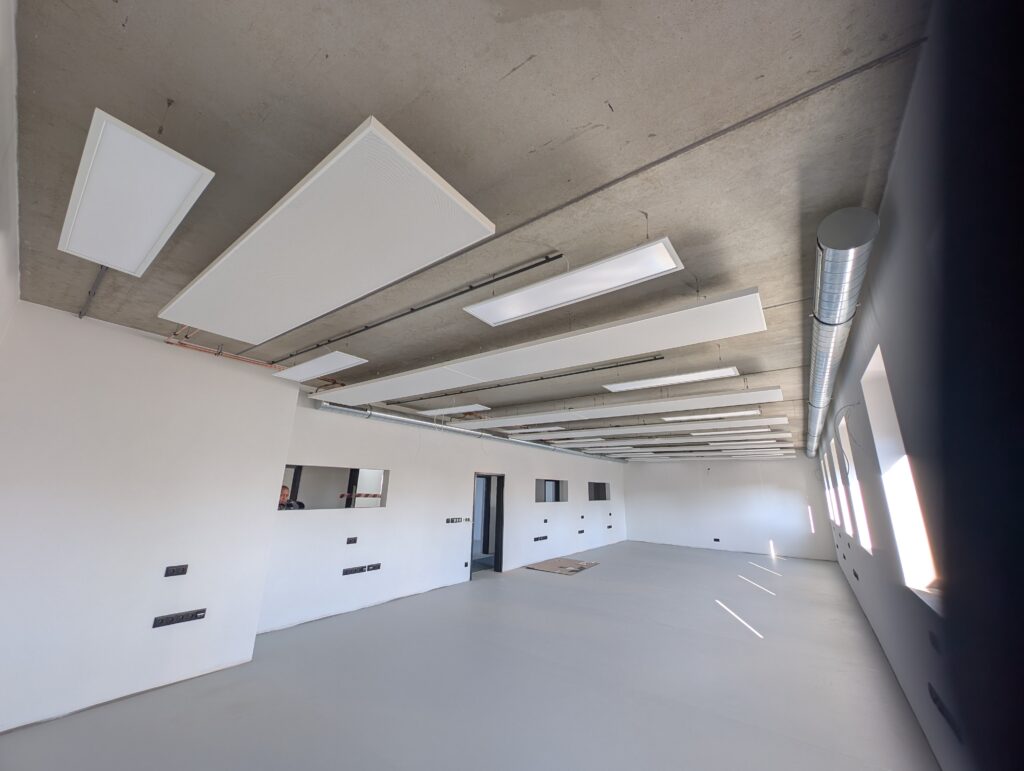
More photos of our installations can be found in the gallery on Flickr.com
How to Choose the Right Energy-Efficient Heating System
Radiant heating can be implemented using several technologies depending on the characteristics of the building, its operation, and the required heating capacity. The choice of the appropriate system depends mainly on the height of the space, the building’s heat losses, and the way the facility is used.
Radiant Panels (Ceiling-Mounted, Hydronic)
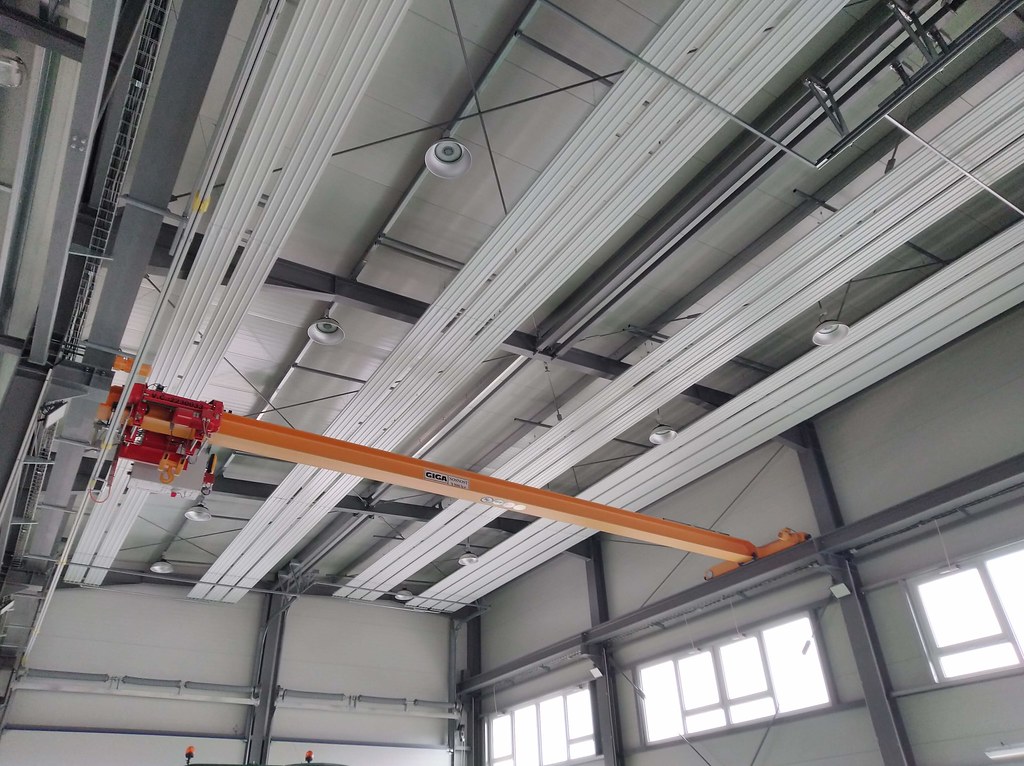
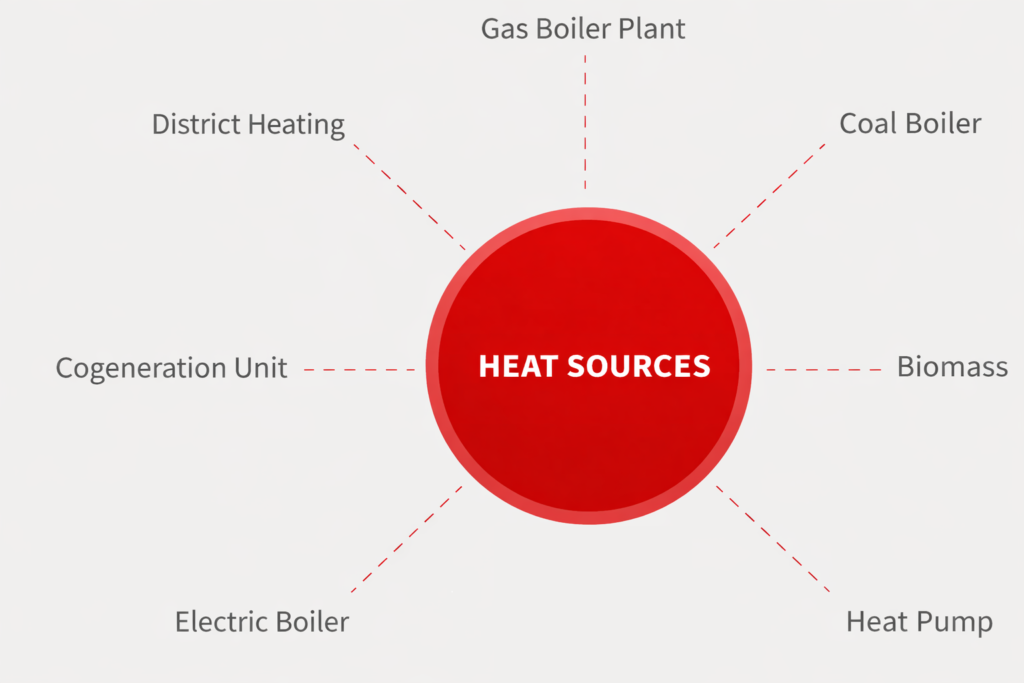
Radiant panels offer long service life, very precise output control, and broad compatibility with various heat sources—from district heating systems and solid fuel, biomass, oil, or gas boilers to heat pumps or the use of technological waste heat. This solution is ideal for manufacturing halls, logistics centers, warehouses, sports facilities, and car service workshops where energy-efficient and evenly distributed heating is required.
Gas Infrared Heaters
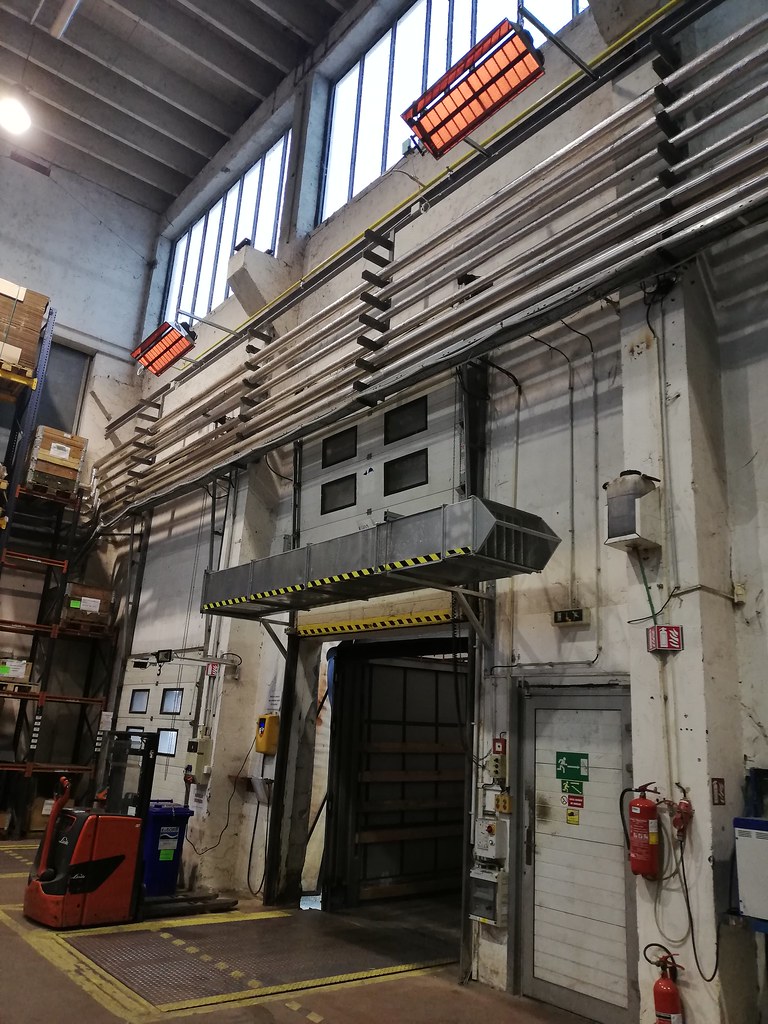
Tube infrared heaters are suitable for local heating of work zones, car service workshops, garages, and facilities with frequently opened doors. They provide a fast heat-up time and efficient heat transfer directly into the working area without unnecessary losses to the surrounding air volume.
Ceramic infrared heaters, thanks to their very high radiant temperature, are ideal for high industrial halls or for installation above doors and loading ramps, where rapid compensation of temperature differences is required.
Radiant vs Warm-Air Heating for Industrial Halls
When heating large industrial spaces, two principles are most commonly compared – radiant heating and warm-air heating. The key difference lies in the way heat is transferred. While warm-air systems heat the air, which then rises toward the ceiling, radiant heating transfers heat directly to people, machines, and surfaces within the hall.
This makes it possible to achieve the same level of thermal comfort at a lower air temperature while reducing heat losses that are common in high industrial halls.
Warm-Air Heating |
Radiant Heating |
|
Heats primarily the air |
Heat acts directly on people and objects |
|
Heat accumulates near the ceiling |
Lower heat losses under the hall ceiling |
|
Longer time to reach operating temperature |
Faster feeling of thermal comfort |
|
Higher energy consumption |
Lower required air temperature |
|
Unpleasant air movement and higher noise levels |
No air circulation and virtually silent operation |
Why Radiant Heating Is More Efficient Than Warm-Air Heating in Industrial Halls
Energy-efficient heating of industrial halls, sports halls, gymnasiums, carpentry workshops, and other large-volume spaces is fundamentally influenced by the way heat is transferred. While warm-air systems or traditional radiators primarily heat the air, radiant heating transfers heat directly to people and structures within the space.
High halls are energetically disadvantageous for warm-air heating because heated air rises toward the ceiling, where temperature stratification and heat losses occur. In contrast, radiant systems ensure a more even temperature distribution without overheating the upper parts of the building.
Compared with radiator heating, radiant systems also allow lower operating water temperatures and more efficient cooperation with heat pumps or other low-temperature heat sources.
A detailed technical and economic comparison can be found here: Comparison of Hall Heating Costs
In practice, the radiant principle is most often the more efficient solution for heating halls – heat is directed into the working zone and significant heat losses under the ceiling are avoided. In large industrial halls, the difference in operating costs is often the main reason why facilities switch from older warm-air systems to radiant heating.
If you are currently planning a heating system for an industrial hall or comparing different technologies for a specific project, we will be happy to assist designers and investors with a free technical proposal and system calculation.
How Much Energy Can Radiant Heating Save?
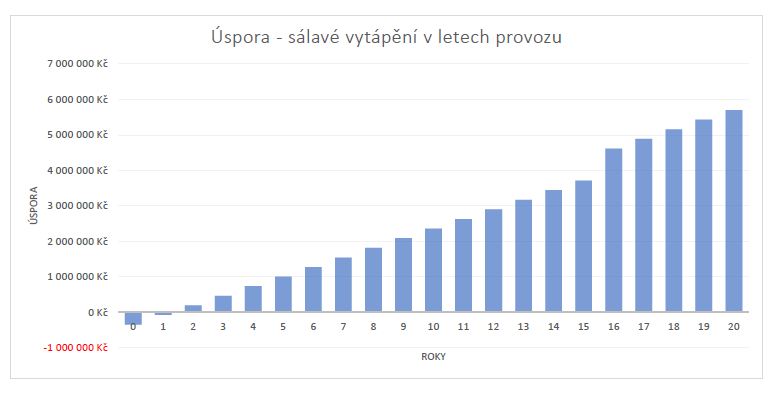
Energy savings with radiant heating arise mainly from more efficient heat transfer and lower heat losses. Heat is delivered directly to people and working surfaces rather than unnecessarily heating the air under the ceiling, which allows the same level of thermal comfort to be achieved with lower energy consumption.
For example, in a workshop with a heat loss of approximately 20 kW, ceiling radiant panels can provide annual savings of about €580 per year compared to conventional radiators installed under windows. If traditional radiators are partially covered by materials or equipment, their efficiency decreases even further—while ceiling-mounted radiant panels remain fully effective thanks to their installation above the working area.
The result is lower operating costs, more even heat distribution, and more stable thermal comfort even with frequent movement of people or frequent opening of doors.
Additional advantages of radiant heating include:
- Radiant heating does not create airflow, making it suitable even for environments such as carpentry workshops.
- It does not stir up dust.
- Radiant panels operate silently, similar to the radiators in your home.
- Thanks to their ceiling-mounted installation, the entire floor area of the hall can be used without restrictions.
- If you are planning both heating and lighting, the simplest solution is to choose radiant panels with integrated LED lighting.
- Radiant panels can be connected to virtually any heat source. Even if the heat source is replaced in the future, the radiant panels can remain in operation.
FAQ – Frequently Asked Questions About Energy-Efficient Radiant Heating Systems
Does Heat Always Rise? Does Radiant Heating Really Work?
No, heat itself does not “rise upward.” Heat is a form of energy that is transferred in three ways – conduction, convection, and radiation. What actually rises is warm air due to convection, because it has a lower density than cold air. In warm-air heating systems, the air is heated and then rises toward the ceiling, creating temperature stratification. In high industrial halls, this leads to significant heat losses.
Radiant heating works differently. It transfers thermal energy directly to people, machines, and building structures within the space. Radiant energy spreads in all directions and is intentionally directed into the occupied zone rather than into the air volume under the ceiling. As a result, heating of industrial halls becomes more energy-efficient and more evenly distributed. Yes, radiant heating really works.
Is Radiant Heating More Efficient Than Warm-Air Heating?
Yes. Radiant systems do not overheat the air under the ceiling but instead deliver heat directly to people and surfaces. This reduces heat losses in high spaces and improves the overall energy efficiency of heating industrial halls.
How Much Can Heating Costs Be Reduced?
The potential savings depend on the type of building, ceiling height, and the original heating system. When replacing warm-air heating systems, savings commonly reach tens of percent. The exact design always depends on the calculation of heat losses and the specific operating conditions of the building.
Is Radiant Heating Suitable for Older or Poorly Insulated Buildings?
Yes. Radiant systems can be used both for local heating of work zones and for full-area heating of buildings with higher heat demand. They are also suitable for renovations of industrial halls and production facilities.
Can the System Be Connected to a Heat Pump or Other Heat Source?
Yes. Hydronic radiant panels and active ceilings are compatible with various heat sources, including heat pumps, boilers, district heating systems, or waste heat from technological processes.
Is Radiant Heating Suitable for Offices and Schools?
Yes. Active ceiling systems provide uniform heating and cooling without drafts while maintaining a high level of thermal comfort. They are often used in office buildings, schools, and other public facilities.
How Is the Design of a Radiant Heating System for an Industrial Hall Prepared?
Our solutions are most often used by design engineers and architectural offices preparing heating concepts for industrial halls and other large-volume buildings. In many cases, the heating concept is already part of the project documentation, but we frequently assist with optimizing the design, calculating heating capacity, and determining the optimal layout of radiant panels.
Based on the documentation provided by the project designer, we propose a suitable system configuration that matches the building’s operation, required thermal comfort, and overall energy efficiency. Our cooperation may also include consultation on control systems, connection to the heat source, or solutions for specific operating conditions. We provide free technical support for designers and architects, ensuring that radiant heating systems can be easily and correctly incorporated into the project.
Thanks to our experience with installations in industrial halls, car service workshops, and sports facilities, we help designers develop solutions that are technically sound, economically efficient, and reliable over the long term.
Summary for Investors and Designers
Radiant heating of industrial halls provides high thermal comfort at lower air temperatures, resulting in significant savings in operating costs. If you are preparing a heating project for an industrial hall, we will provide technical documentation and free consultation so the system can be integrated into your project smoothly and without complications.